Natural gas
Confirm service availability, connection requirements, and timing with the utility for your address. A nearby gas line does not by itself establish that your home is ready for new equipment.
Delaware County · Chester County · The Main Line
A new fuel source can change more than the boiler or furnace. Availability, gas supply, venting, hot water, and the work around the equipment all belong in the plan.
We compare suitable gas or propane equipment with your existing heating system and explain the complete installation before putting a proposal in front of you.
Still comparing fuels? See the heat pump route or compare all oil conversion options.
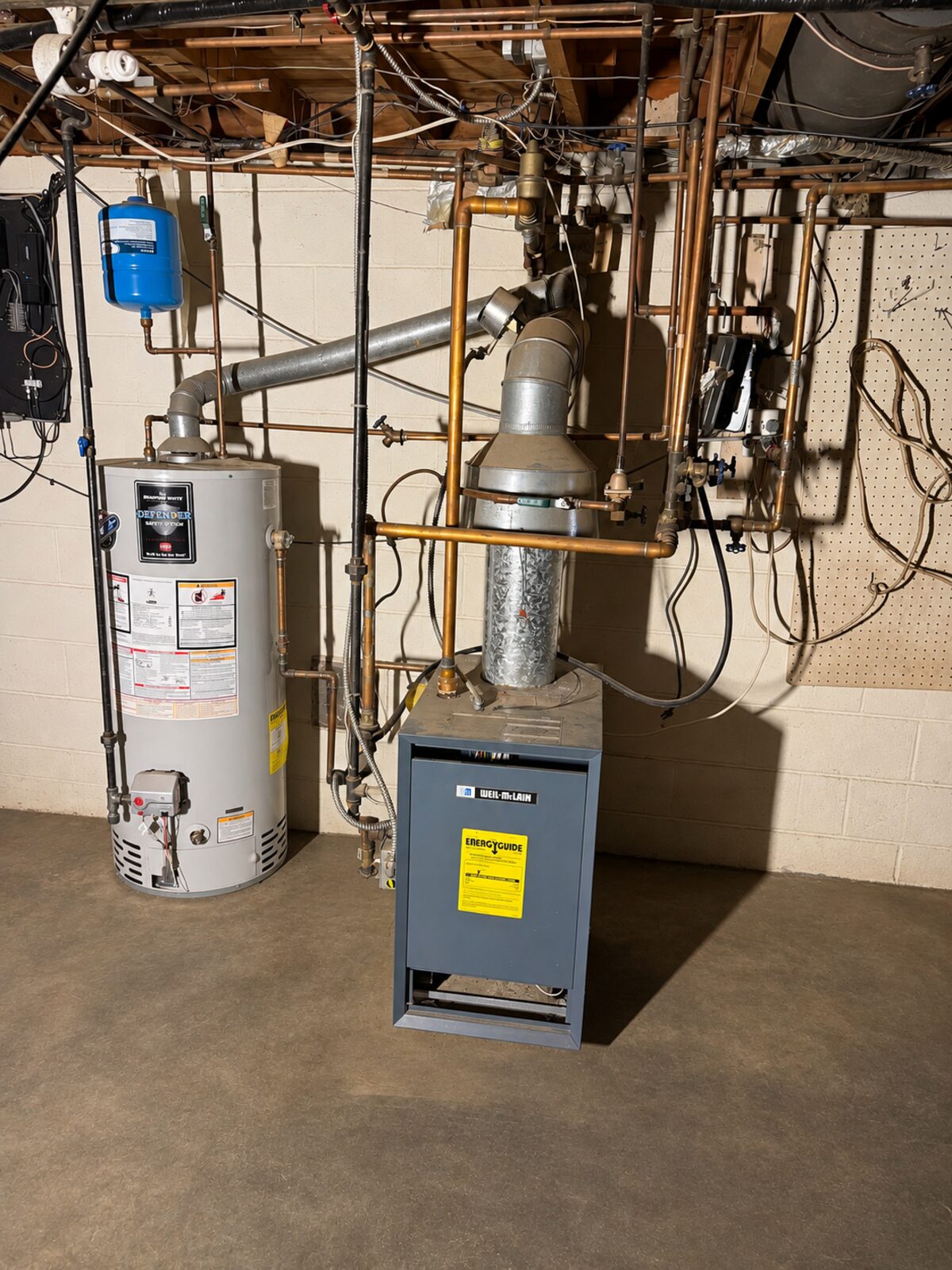
Confirm service availability, connection requirements, and timing with the utility for your address. A nearby gas line does not by itself establish that your home is ready for new equipment.
Tank location, fuel delivery, ownership or lease terms, and the proposed equipment need to be considered together. Confirm supplier arrangements before committing to a change.
A radiator or baseboard system needs a different equipment plan from a ducted furnace. We assess the distribution system and what can appropriately stay.
We review the proposed fuel supply, equipment requirements, venting, combustion air, controls, and service access. The final plan needs to account for other appliances and any shared venting as applicable.
Do not assume every oil appliance can be changed to another fuel with a burner swap. We confirm the appropriate equipment and supported installation rather than quoting from appearance alone.
Existing radiators, baseboard, or ductwork may be part of the new plan, depending on their condition and the proposed equipment. We explain what can remain and what needs work. Replacing every component is not the starting assumption.
We also compare the complete project cost and operating-cost factors. Fuel rates, your home, equipment performance, and use all matter. A lower fuel price alone does not establish the right project for your house.
They may remain part of a suitable new boiler installation. We assess the existing system, condition, controls, and heating needs before explaining what stays and what changes.
Our standard conversion leaves the oil tank in place. Any tank work is stated separately in the proposal. Buried tanks require an appropriate specialist.
You can start a planning conversation now. Confirm availability and connection requirements with the utility or propane supplier so the final proposal and schedule can reflect the actual supply plan.
Send equipment photos, your town, and anything the utility or propane supplier has confirmed. Tell us how the house is heated and whether the oil boiler also makes hot water. We will help you work through the next step.
Start my gas or propane conversion estimateWe use cookies to enable essential functionality on our website, and analyze website traffic. By clicking Accept you consent to our use of cookies. Cookies and Privacy Policy.